
Team Members: David Azar, Morgan Mueller, & Billy Bennett
We are aiming to build a musical and historical experience which would allow those with little to no musical experience to achieve a high level of musical performance while educating them on a fascinating piece of 1950’s musical technology that is still widely used today.
Our project will feature the following hardware technologies:
1. Microsoft Kinect
2. Arduino MKR 1010 Wifi
3. Hall Effect sensor or magnet sensor
4. Leslie speaker with pedal
5. digital projector
Our project will use the following software technologies and algorithms:
1. OpenFrameworks
2. MaxMSP
3. Arduino IDE
4. Ableton Live
5. OSC (Open Sound Control)
6. Markov Chains
7. FFT for Audio Frequency Extraction
This week we focused on getting the following aspects of the project together:
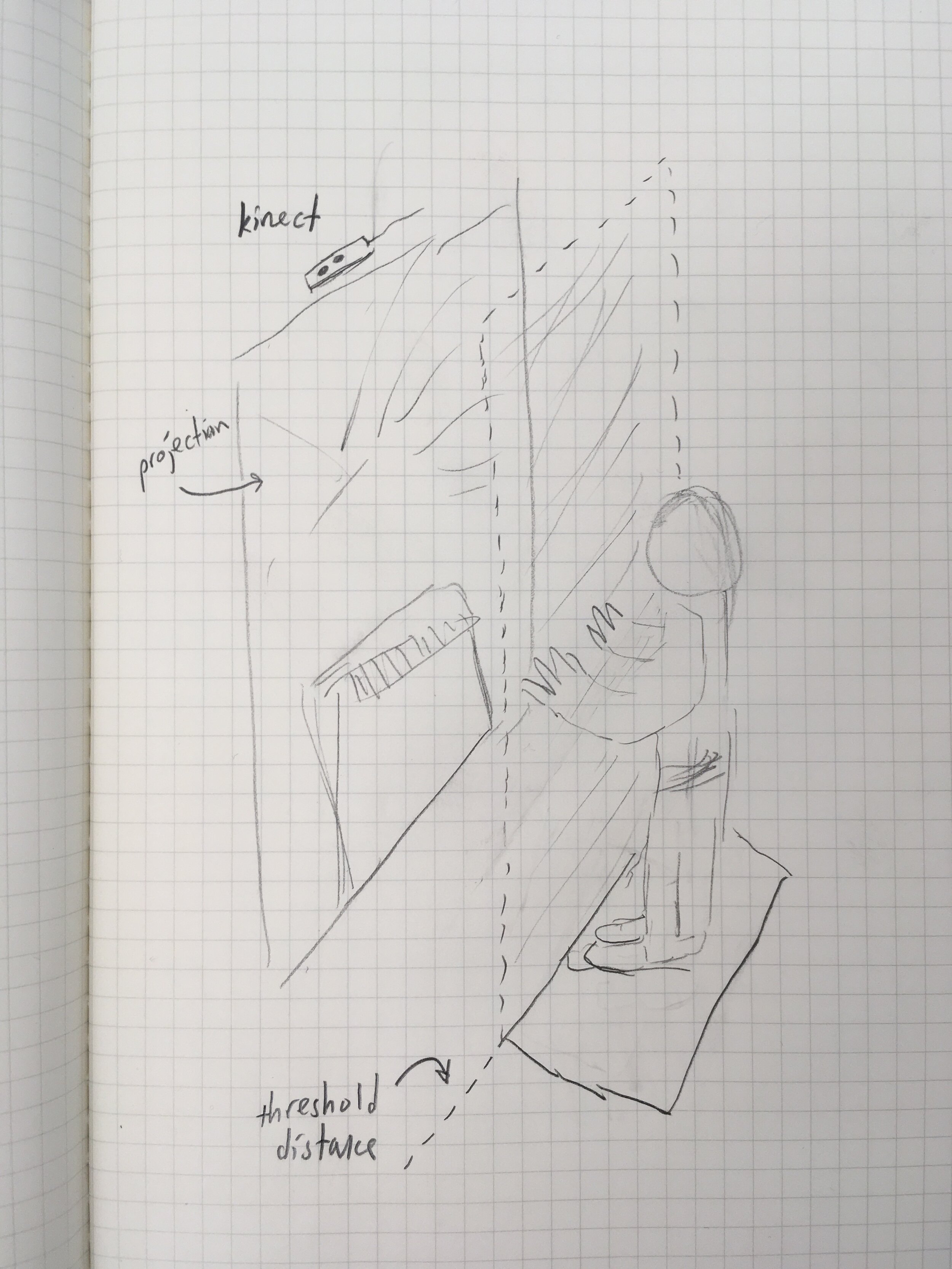
Mapping out a space for users to stand which can be a threshold beyond which users can extend their hands into the tracking area which will trigger the keyboard sounds.
Determining the visual presentation of the project based on the musical elements and the physical look of the Leslie speaker. Further considerations include the layout and decor of the room as well as the color palette and geometric properties of the graphics used in the projection.
Considering a method for tracking the rate at which the Leslie speaker rotates to add a visual element that enhances users ability to understand the unique sound that the speaker produces.
Making another visual element that triggers each time a note is played to give the user better feedback as to their control over the sound.
For the visual aesthetic, we want to have something warm that matches the colors of the Hammond and Leslie. We looked at a number of living room designs from the 1970’s and found a few that even had an organ as a part of the decor.


Here is a drawing of the performance area in which the user will stand to play the instrument.
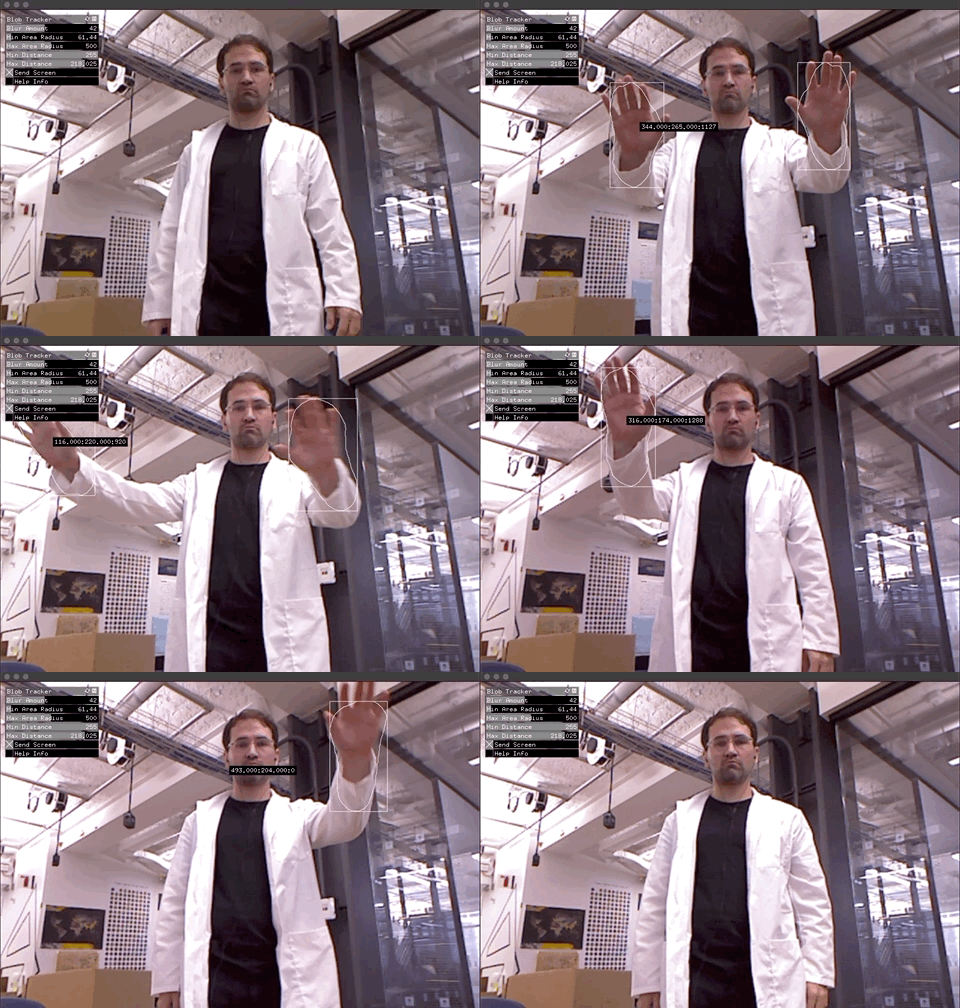
Below is a rendering of what the final visual interface may look like. We thought it would be helpful for the user to have icons for their hands that mirror the blob movement and actions on th keyboard. The hands will hover over the top of a projected Hammond organ keyboard where the keys will be “played”. This is to give the user some context as to what sounds they are hearing and some familiarity on how to move. Here is a demo of the projection with a Hammond and icons for the hands.

Here is a photo of the rough layout of the room. Users enter from the right and approach the Leslie and performance rectangle.

Once the user enters the room, they can approach the performance area rectangle and begin to play the instrument by waving their hands in the air. The more the user moves their hands, the more notes will be played. In order to facilitate a meaningful musical performance, the musical notes must be pre-determined to some degree, yet flexible enough to give the user the perception that they are freely playing the instrument. The notes that the user will play will be be determined by use of a Markov Chain which will intelligently choose each sequential note within the key. The Markov probabilities will be trained on sequences of notes from the Ethiopian piano song “The Homeless Wanderer” by Tsegue-Maryam Guebrou. This song is especially useful as many of the musical passages are monophonic, meaning there is only one note played at a time, making the model easier to train and giving users a simpler model on which to improvise. We will use the sigmund~ object in MaxMSP for note extraction and feed a list of extracted notes into the ml.markov object.
The musical inspiration for this project comes from Ethiopian Jazz. We will recreate a backing track to the tune “Minlbelesh” by Hailu Mergia & Dahlak Band. This will play underneath the user’s notes improvised hand movements as described above.

Here is a rough sketch of the magnet sensor which will be be placed on to the Leslie speaker. Each time the magnet passes the sensor, an Arduino MKR1010 will output an OSC message over Wifi to the host computer. These messages will be used to trigger a visual response to give the user more sensory feedback as they hear the Leslie speaker effects.
All of the projections will be controlled in MaxMSP, taking cues from the body movements of the users and the spinning of the Leslie speaker.